
Project spotlight: a temporary roof over a damaged Iceland store in March
By Ben Wells · · 2 min read
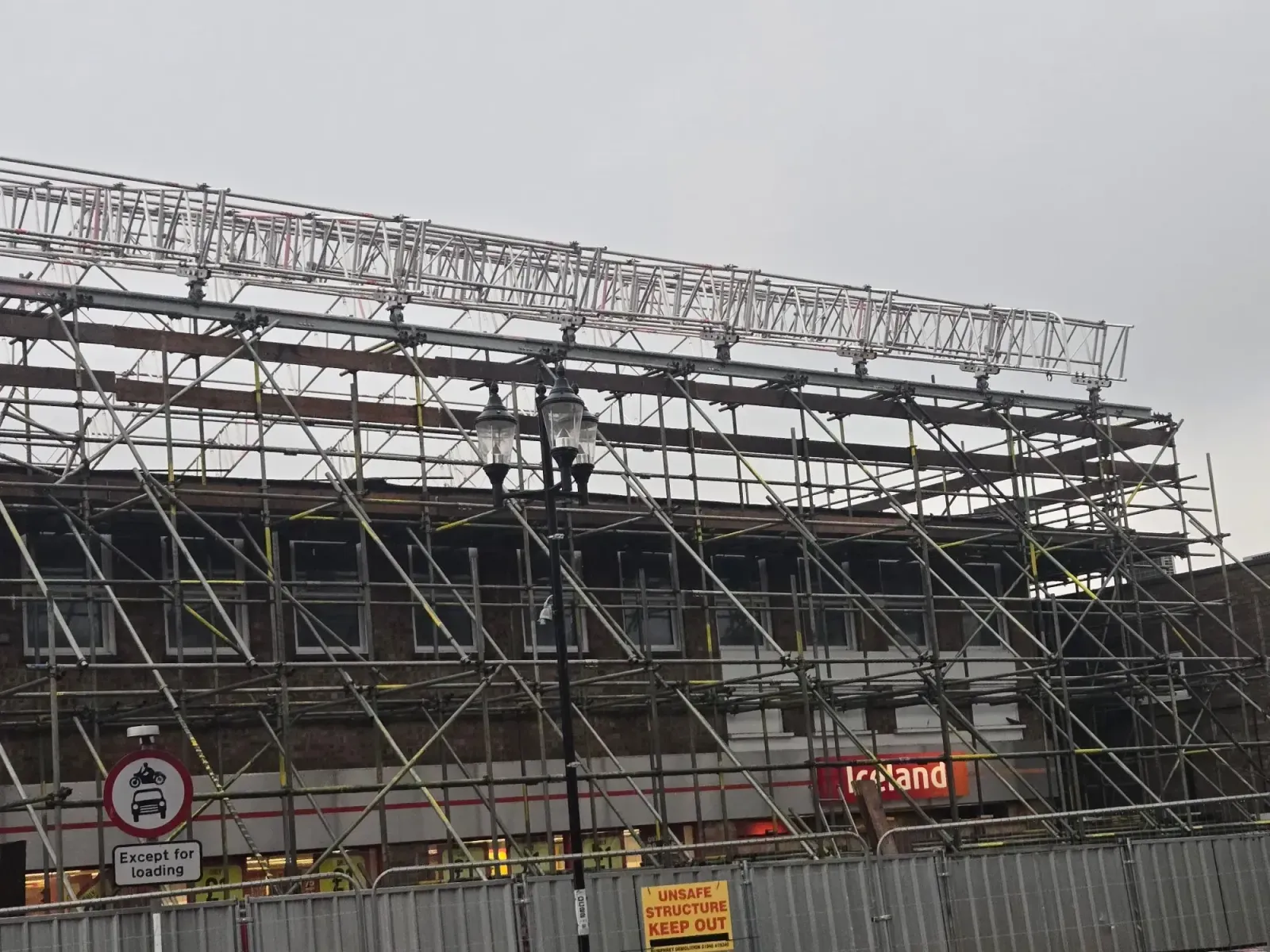
When part of the roof collapsed at an Iceland store in March, Cambridgeshire, the building needed a temporary roof and access scaffold so work could carry on safely and under cover. We worked with Trident Scaffolding on the job, surveying the building by drone and designing the scaffold.
Starting with a drone survey
A damaged building is hard to measure. Old drawings no longer reflect what’s there, and the parts you most need to see are often the parts nobody should be standing on.
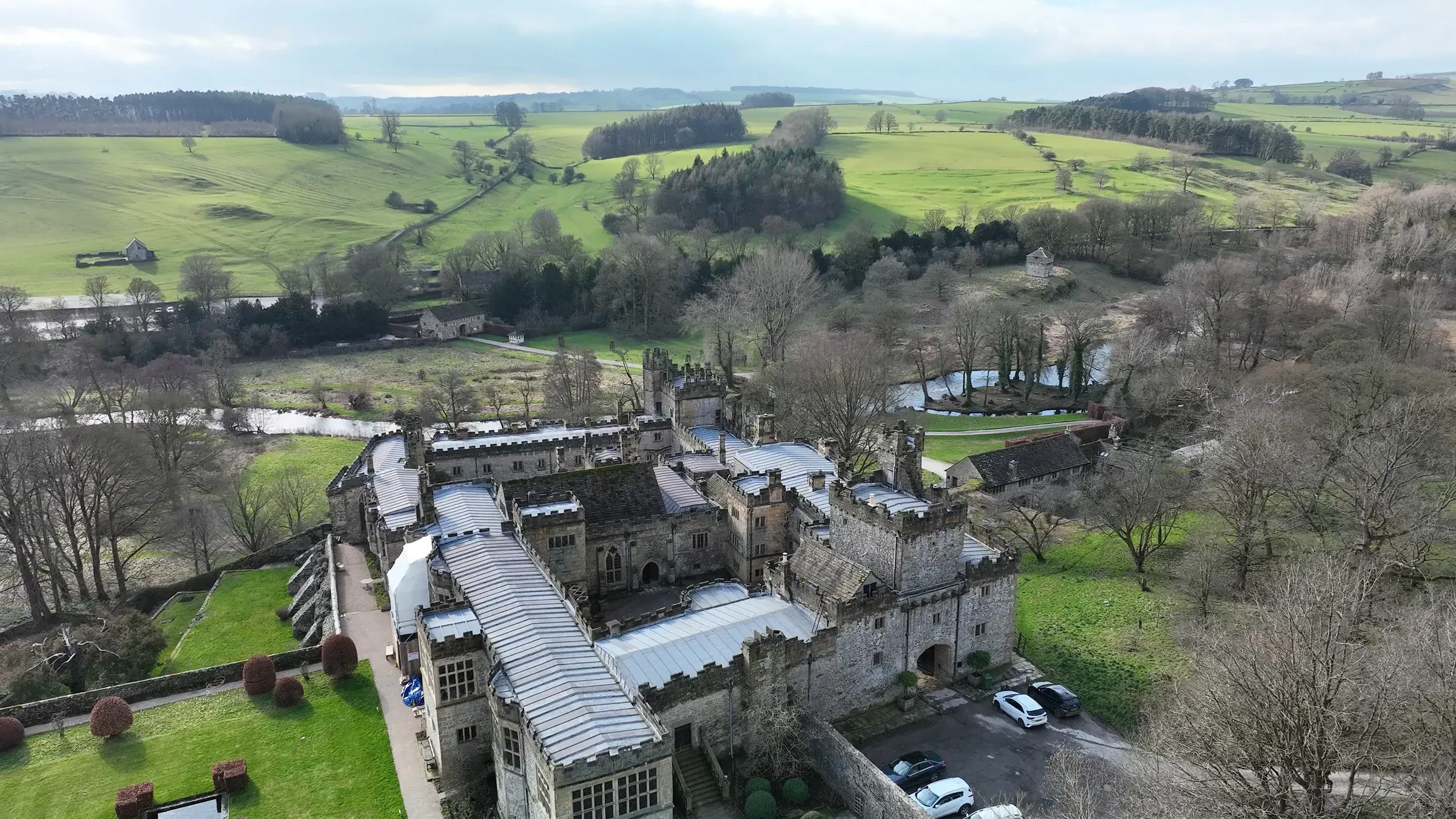
So we started with a drone survey. From the flight we produced a 3D model and a point cloud of the store and the damaged roof. That gave us an accurate picture of the building after the collapse, which we used as the basis for the scaffold design.
Designing around limited ties
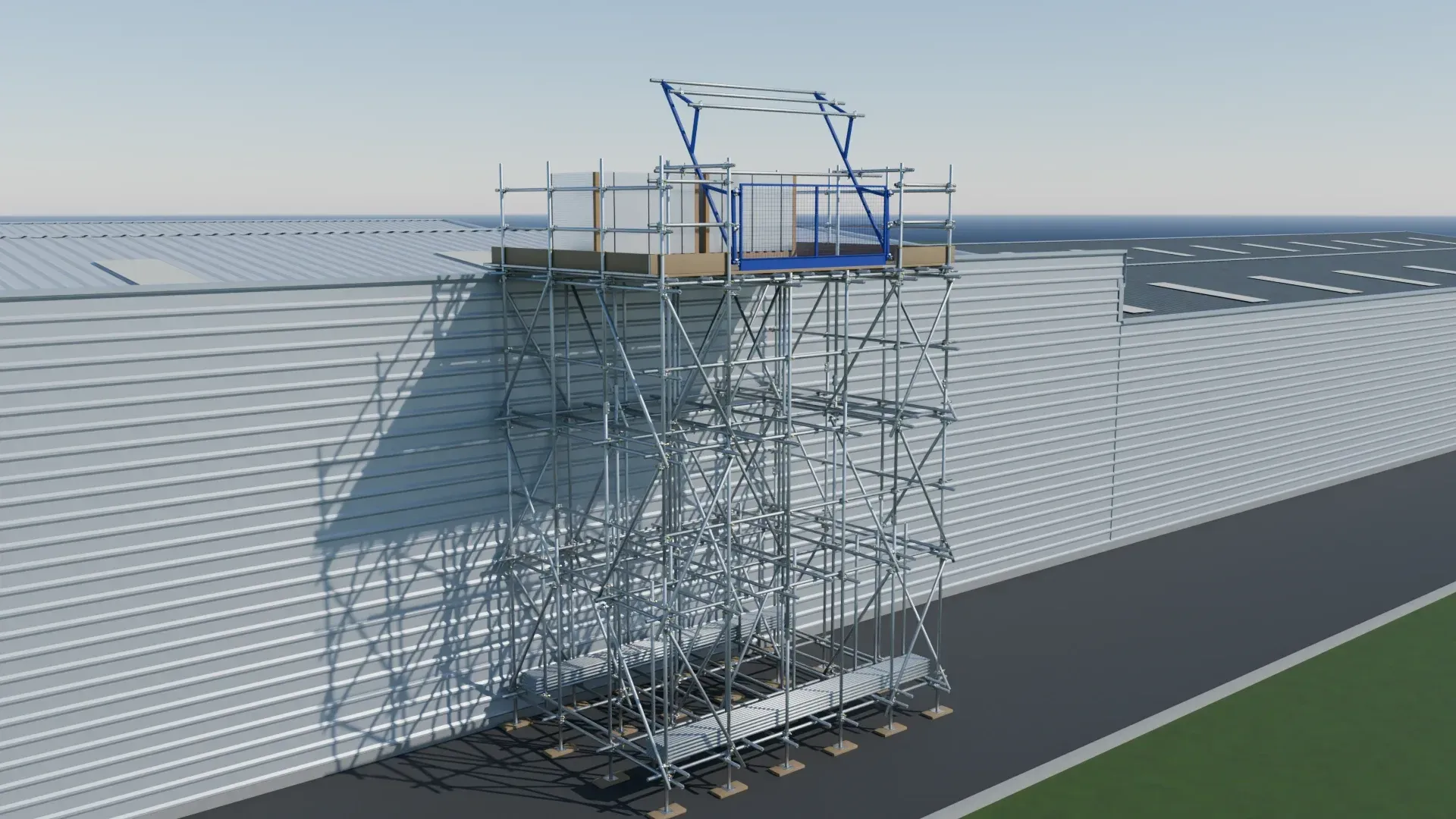
Scaffolds are normally tied into the building they stand against, and those ties do a lot of the work in keeping the scaffold stable. On this job, the structural damage meant ties could only be fixed up to around 4 metres, well below the height the scaffold needed to reach.
Above that height, the scaffold gets its stability from buttressing and other supports instead. Buttresses are braced frames that project out from the scaffold at intervals and bear on the ground, resisting the wind and other loads that ties would normally take. They need space at the base of the scaffold and careful design, but they mean a scaffold doesn’t have to rely on a structure that can’t safely take the load.
A rolling temporary roof
The temporary roof uses a DESSA rolling roof system carried on the scaffold. Once the scaffold was in place, the roof could be rolled into position quickly, covering the building so other trades could get on with work inside.
When does a scaffold need this kind of design?
Any scaffold that can’t be tied in the usual way, carries a temporary roof, or stands against a damaged or fragile building needs a bespoke design. Standard configurations, such as those in NASC TG20, assume the scaffold can be tied at regular intervals. When that isn’t possible, a designer needs to work out how the scaffold will stay stable. Our scaffold design page covers the common cases.
See the project
You can see more photos and the full write up in our Iceland, March case study.
If you’re facing a similar job, find out more about our drone surveying service, or get in touch. We reply to every enquiry within 24 hours.